Food Allergen Typeface: A Practical Guide for Small Business Branding
Running a small business means wearing many hats. You are the CEO, the marketer, the customer service rep, and often the designer too. In this chaotic environment, consistency is your best friend. It builds trust. When a customer sees your logo on Instagram, then your packaging in their hands, and finally your receipt in their pocket, those elements need to feel like they belong to the same family. That is where choosing the right Dingbats font becomes a strategic business decision rather than just an aesthetic choice.
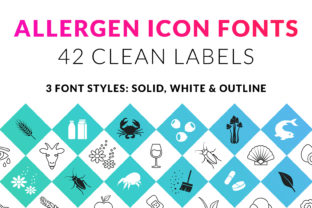
Enter Food Allergen. This isn’t just another decorative typeface; it is a functional design asset that speaks directly to health-conscious consumers. By combining 34 common allergy icons—ranging from gluten and cow milk to soy beans, plant pollens, dust mites, and drug allergies—it offers a unique visual language. For entrepreneurs in the food, wellness, and lifestyle sectors, using Food Allergen can transform how you communicate safety, transparency, and care.
Why Visual Clarity Matters in Modern Branding
Today’s consumers are more informed than ever. They read labels. They scan ingredients. They look for symbols that tell them at a glance if a product is safe for their specific needs. As a business owner, your goal is to make that scanning process effortless for your customers. A cluttered or ambiguous label can lead to confusion, returns, or worse, allergic reactions.
Food Allergen addresses this head-on. Its style is clean, recognizable, and highly legible. The personality of the font is helpful and authoritative without being clinical or cold. It strikes a balance between modern typography and intuitive iconography. When you use this creative font on your product labels or website visuals, you are signaling to your audience that you prioritize their well-being. This subtle cue enhances your brand identity, making your business appear more professional, trustworthy, and aligned with contemporary values of inclusivity and health.
Real-World Applications for Your Business Touchpoints
The versatility of Food Allergen allows it to shine across various marketing materials. Here is how you can practically apply this dingbat font to different aspects of your business:
- Packaging Design and Product Labels: If you sell baked goods, supplements, or skincare, space is premium real estate. Using Food Allergen as a display font for allergen warnings saves space while ensuring high visibility. Instead of writing out "Contains Gluten" in a standard paragraph, you can use the dedicated glyph. This reduces text density and makes critical information pop.
- Social Media Graphics: On platforms like Instagram and Pinterest, thumbnails must grab attention instantly. Use the icons from Food Allergen as accent elements in your posts. For example, a café owner might post a graphic about their new dairy-free menu items, placing the cow milk and soy bean icons next to the headline. It creates immediate context before the user even reads the caption.
- Menus and Flyers: For restaurant owners or event planners, clarity is key. Integrating these icons into digital menus or printed flyers helps customers navigate options quickly. It reduces the cognitive load for diners who have dietary restrictions, improving their overall experience with your brand.
- Website Banners and Digital Ads: When driving traffic to your online shop, use the font to highlight key selling points. A boutique owner selling organic cotton clothes might use the dust mite icon to emphasize hypoallergenic properties. This visual shorthand connects faster with potential buyers than long descriptions.
- Thank-You Cards and Stickers: Add a personal touch to your unboxing experience. Include a small sticker featuring the allergen icons to remind customers of the care put into their order. It reinforces brand recall every time they open a package.
Strategic Font Pairing for a Cohesive Look
One of the biggest mistakes small business owners make is letting a decorative font do all the heavy lifting. While Food Allergen is excellent for headlines, logos, and accent graphics, it should not be used for body text. Its icon-heavy nature can become overwhelming if overused.
To maintain readability and professionalism, pair Food Allergen with a clean sans serif font for your primary content. A modern sans serif provides the necessary structure and legibility for detailed descriptions, pricing, and contact information. This contrast creates a dynamic hierarchy: the dingbat font captures attention and conveys mood, while the sans serif delivers the facts clearly.
Alternatively, if your brand leans towards a more traditional or artisanal feel, consider pairing it with a readable serif font. The combination of a classic serif with the modern, functional icons of Food Allergen can create a sophisticated yet approachable aesthetic. This works particularly well for handmade candle labels, beauty product packaging, or coaching business websites that want to convey expertise and warmth simultaneously.
Ensuring Readability Across Devices and Mediums
As an entrepreneur, you need your designs to work everywhere. A font that looks great on a desktop monitor might fail miserably on a mobile screen or a tiny product tag. Before committing to Food Allergen for your entire brand, test it rigorously.
Print out samples of your labels and hold them at arm's length. Can you distinguish the difference between the gluten icon and the wheat icon? Check how the glyphs render on smaller mobile screens for your social media ads. Legibility is paramount. If a customer has to squint to understand an allergen warning, the design has failed its primary purpose. Ensure that the size of the glyphs is sufficient to maintain clarity, especially when scaling down for digital thumbnails.
Licensing and Commercial Use Considerations
Finally, protect your business by understanding the legal side of design assets. Not all fonts allow for commercial use. Since you intend to use Food Allergen on products, packaging, templates, merchandise, client work, or digital downloads, you must verify the license agreement provided by the font creator.
Look for a commercial font license that explicitly permits usage on physical goods and digital media. Some licenses restrict the number of impressions or require additional fees for certain types of distribution. Ignoring these details can lead to costly legal issues down the line. Always keep a record of your purchase receipts and license agreements. This diligence shows your customers that you run a legitimate, respectful, and professional operation.
By integrating Food Allergen thoughtfully into your brand strategy, you do more than just decorate your materials. You communicate value, safety, and attention to detail. In a crowded marketplace, these small touches build the foundation of a loyal customer base. Choose wisely, pair carefully, and let your brand speak clearly to the people who matter most.